When a quilt in progress is missing a block, the first instinct is to go looking for a pattern that already exists and hope one of them fits. The other path is to design the block around the space it has to fill, letting the gap itself set the terms. That single choice changes everything that follows, from the measurements to the way the block finally sits among its neighbours.
The pumpkin block in this video was drawn from scratch, and not because ready made pumpkin blocks are thin on the ground. It was drawn because its measurements had to serve one particular place inside a quilt that was already well under way. Starting from the space rather than from a pattern meant the block could never be the wrong size for its home, because its size was taken from that home to begin with.
The more transferable decision comes next. The body of the pumpkin was left as a single whole piece of fabric, with no piecing at all, because the rest of the quilt already carried more than enough colour and movement. In a calmer, quieter quilt, that very same shape could be built from strips or from small squares to give it life. A block's visual density is never decided by the block on its own. It answers to everything sitting around it, so the busier the surroundings, the more a plain, restful shape earns its keep. It is worth adding that a slight wobble in a stem or a leaf is no fault at all when the thing you are drawing grew in the ground, and organic shapes are often the more convincing for being a little irregular.
- Measure the empty space before you draw anything. The measurement of the place is what fixes the measurement of the block, so take it first and let every other decision answer to it.
- Set the density against the whole quilt. Choose one uncut piece when the quilt around it already has colour and construction to spare, and save the pieced version for a block that sits in a quieter setting.
- Pin long framing strips at the start, the end and two points between. A long strip wanders in the centre even when both ends are perfectly aligned, and those middle pins are what hold it true.
- Press the framing seams inwards when the others were pressed outwards. Turned the opposite way, they nest into the seams they meet, and the joins pull together cleanly.
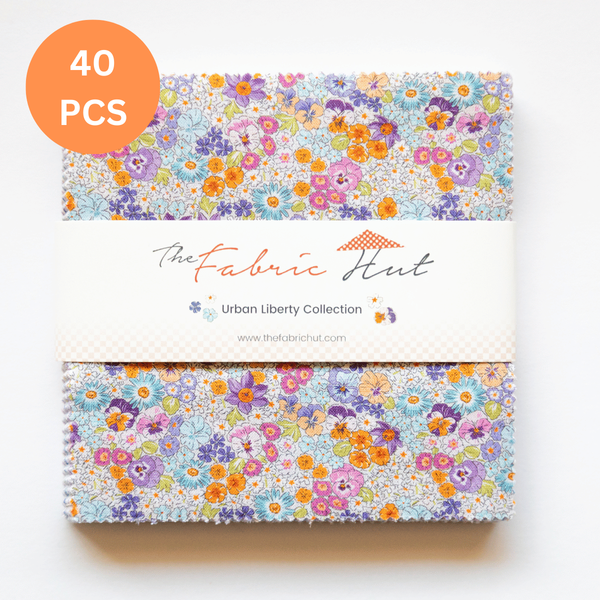
Fancy piecing your pumpkin instead? If your quilt is quiet enough to want a little more going on, have a peek at our charm packs, whose little squares are just right for building a patched pumpkin full of colour. We would love to see how yours turns out!
A block drawn for its place settles into a quilt in a way a block picked from a catalogue rarely manages, because it was measured, weighted and coloured for that one spot and no other.