Two questions land in our inbox more than almost any others, and they arrive in the same breath: do I need to prewash my fabric, and how do I wash my quilt for the very first time? Marc Schilling of The Fabric Hut answers both in the video above. The short version of the first is that it depends. The short version of how to wash a quilt is that everything should be gentle and everything should be cold. Everything he says is written out below, so you can come back to it on laundry day without scrubbing through the video.
Do you need to prewash quilting fabric?
Marc's honest answer is that it depends, and then he makes it useful by saying exactly what it depends on. There are three things to think about before a fabric goes near the washing machine: when it was made, who made it, and where it has been.
When it was made
Fabric printed in the last three to seven years is, in Marc's words, going to be just fine. Modern milling and the arrival of digital printing for many kinds of print have cut dye bleeding a great deal. The technology has been improving steadily for years, and he puts the real turning point in roughly the last three to five of them. If the fabric is new, the question of bleeding is mostly one you no longer have to carry.
Who made it
The name brand manufacturers, the ones quilters recognize and look for, are what Marc calls tier one manufacturers, and they are the ones we carry. New collections bought off the rack from those makers, at a local shop or online, do not need to be prewashed.
There is one clear exception, and Marc names it without hesitation: batiks are a different category, and you definitely want to prewash batiks.
Where it has been
History is the third test, and it is the one that most often tips the answer to yes. Fabric gifted from someone else's stash, the bundle that comes home from your quilt circle, yardage with no label and no story: Marc would prewash all of it.
He gives his own example. On a trip to Missouri he picked up some vintage Christmas fabric he was thrilled to find, but he knew it had been manufactured in the 1980s, and that meant it was getting washed before it went into anything. When in doubt, he says, absolutely prewash, especially when you are working with yardage.
What about precuts?
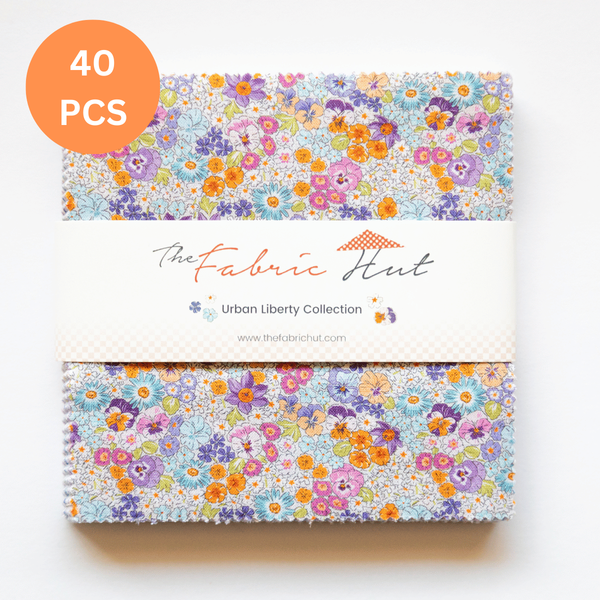
Precuts are the case where Marc would usually leave well alone. A charm pack, a layer cake or a jelly roll has already been cut to a straight edge, and those cut edges tend to fray in the wash. He would not prewash precuts very often, and when he does, he does it very carefully. The Quilter's Bible makes the same point from the other side: small precut pieces such as charm squares can distort in the wash, so they are better used as they come.
If fraying is what worries you about a cut edge, our note on stopping fabric fraying at the cutting mat covers the other way to deal with it.
How to wash a quilt for the first time
Behind Marc in the video hang two of our quilts. Because of the Brave has reds, dark blues, a digitally printed flag in the center and ivory around it. Honor and Valor is the same family of color, blues and reds with whites. Those are exactly the colors that tend to bleed and turn their neighbors a shade they were never meant to be, and they are the reason the first wash deserves a plan.
This is Marc's process, in order.
1. Put in color catchers, every time, for the first few washes
Marc is emphatic on this one: always, always, always, and no matter how good the fabric is. Drop one or two color catcher sheets into the drum. If the quilt is heavy on strong colors, the way Because of the Brave is, use two. Keep doing it for the first two or three washes, especially on anything with a lot of black, dark blue or red.
2. Set the machine to gentle
The delicate or gentle cycle, not a regular or colors cycle.
3. Use a gentle detergent, and only half of it
A free and gentle detergent, with no dyes and nothing harsh in it. Marc does not use a full cup either. He generally cuts the dose in half.
4. Cold water
Not warm and not hot. Cold, all the way through.
5. A gentle spin, if your machine has one
Many machines have a gentle or low spin setting that turns the load lightly instead of whipping it around. Marc uses it on the first wash so that everything settles and sets properly.
6. Air dry it the first time
Do not put the quilt in the dryer for its first wash. Drape it over the shower curtain rod or hang it on the line and let it air dry. That, Marc says, is the best thing you can do for it.
7. Optional: ten minutes on low heat to bring the softness back
Once it is dry, Marc likes to put the quilt in the dryer on a very low heat tumble for about ten minutes. It is not about drying, it is about getting back some of the softness that air drying takes out of the cotton.
The one rule to remember: gentle and cold
If the seven steps are too many to hold on to, Marc boils them down to one sentence. Set everything to gentle, and keep the temperatures as low as you can get them, cold all the way through. Do that and a new quilt comes through its first wash looking the way it did going in.
It is also the reason the process is not stressful. Nothing in it is complicated, and none of it asks for special equipment beyond a pack of color catchers and a patient afternoon.
How to wash a quilt: the questions we are asked most
Can you wash a quilt in a washing machine?
Yes. A quilt made from modern quilting cotton goes in the machine, as long as the drum is large enough for it to move. Use the gentle cycle, a mild detergent at half the usual dose and cold water, as set out above. The Quilter's Bible gives the same advice for everyday quilts: a delicate, low temperature program, a mild washing agent and only a short spin.
How do you wash a handmade quilt?
Exactly the way Marc does it for the first wash: color catchers in, gentle cycle, half a dose of gentle detergent, cold water, gentle spin, then air dry. Handmade quilts are not more fragile than bought ones, but they usually have more dark and saturated fabrics sitting next to light ones, which is why the color catchers matter.
How do you dry a quilt?
Air dry it the first time, draped over a shower curtain rod or on the line. If it comes out stiffer than you like, finish with about ten minutes in the dryer on very low heat, which brings back the softness without cooking anything.
Should you wash fabric before sewing?
Not if it is new fabric from a name brand manufacturer and was made in the last several years. Yes if it is a batik, if it is vintage, if it came from someone else's stash, or if you simply do not know its story. When in doubt, prewash, especially yardage.
Do precuts need to be washed?
Usually not. Their edges are already cut and they fray in the wash. If you must, wash them very carefully.
How many color catchers should I use?
One or two. Use two when the quilt is heavy on strong colors, such as dark blues, reds or blacks, and keep using them for the first two or three washes.
Why do batiks need prewashing when other fabrics do not?
Marc puts batiks in a category of their own and says to prewash them every time. The exemption for new fabric applies to fabric from the name brand printers, and batiks sit outside it.
What about an antique or vintage quilt?
That is a different job from a first wash. The Quilter's Bible advises avoiding washing an antique quilt if at all possible, and removing dust with very gentle vacuuming through a piece of open weave net laid over the quilt instead. If the quilt matters to you, ask a textile conservator before it goes anywhere near water.
What to have ready
Color catcher sheets, two for a quilt with a lot of dark or red fabric. A gentle, dye free detergent, measured at half a dose. A machine you can set to a gentle cycle, cold water and, if it has one, a gentle spin. Somewhere to hang the quilt while it dries, a shower curtain rod or a line. And, if you want the softness back, a dryer with a very low heat setting for ten minutes at the end.
Where to start
If your fabric is new and from a maker you trust, start at the cutting mat and save the washing for the finished quilt. If it is a batik, a gift or a find from years ago, prewash it first, let it dry, and then it goes to the mat like any other fabric, where the rotary cutter checks that keep a cut accurate take over. Either way, when the quilt is done, give its first wash the gentle, cold treatment and let it air dry.
If you are still at the fabric stage and deciding what goes into your next quilt, sorting the fabric you already own is a good place to find the vintage and gifted pieces that need a wash first. Our step by step guide to making a quilt covers everything between the cutting mat and the washing machine, and our beginner quilt patterns are the shortest route to a quilt that is ready for its first wash.